
The full chain, one supplier
Sampler, on-site installation, ISO 13833 sampling, 14C analysis through an accredited laboratory, performance evaluation, and the final report — handled under one contract.
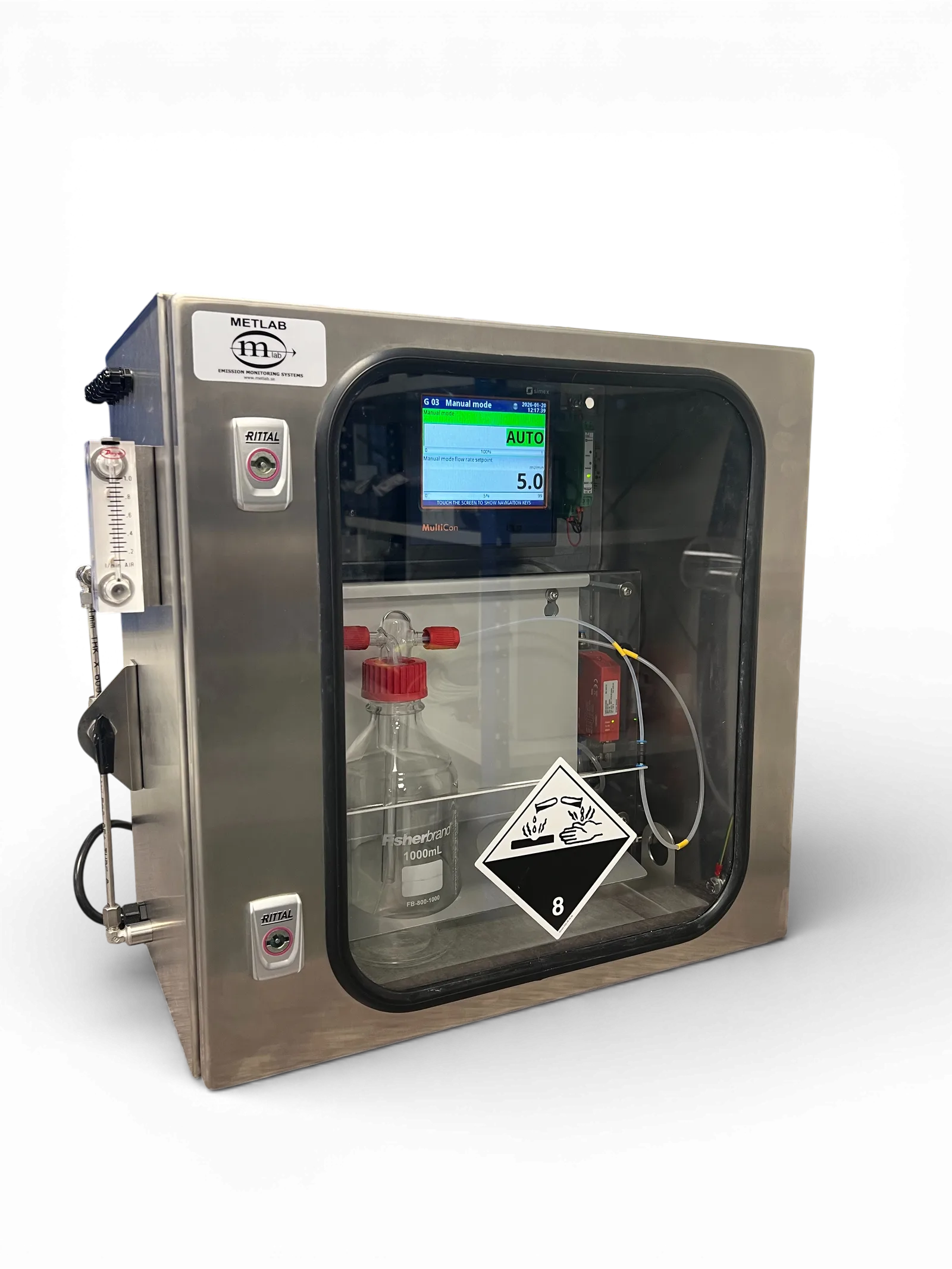
The METLAB C14G2 is an ISO 13833:2013 flow-proportional sampler that stays precise even under the most variable flue gas conditions. Pair it with our sampling services, 14C analysis and reporting — and go from zero to full compliance with one partner. Available in all EU countries.
Reporting biogenic CO2 under the EU ETS rests on two things: sampling carried out according to ISO 13833, and 14C analysis from an accredited laboratory. The analysis requirement is fixed; the sampling has to be done right. METLAB covers both — and our accreditation is the reason a customer can trust we do the sampling to standard.
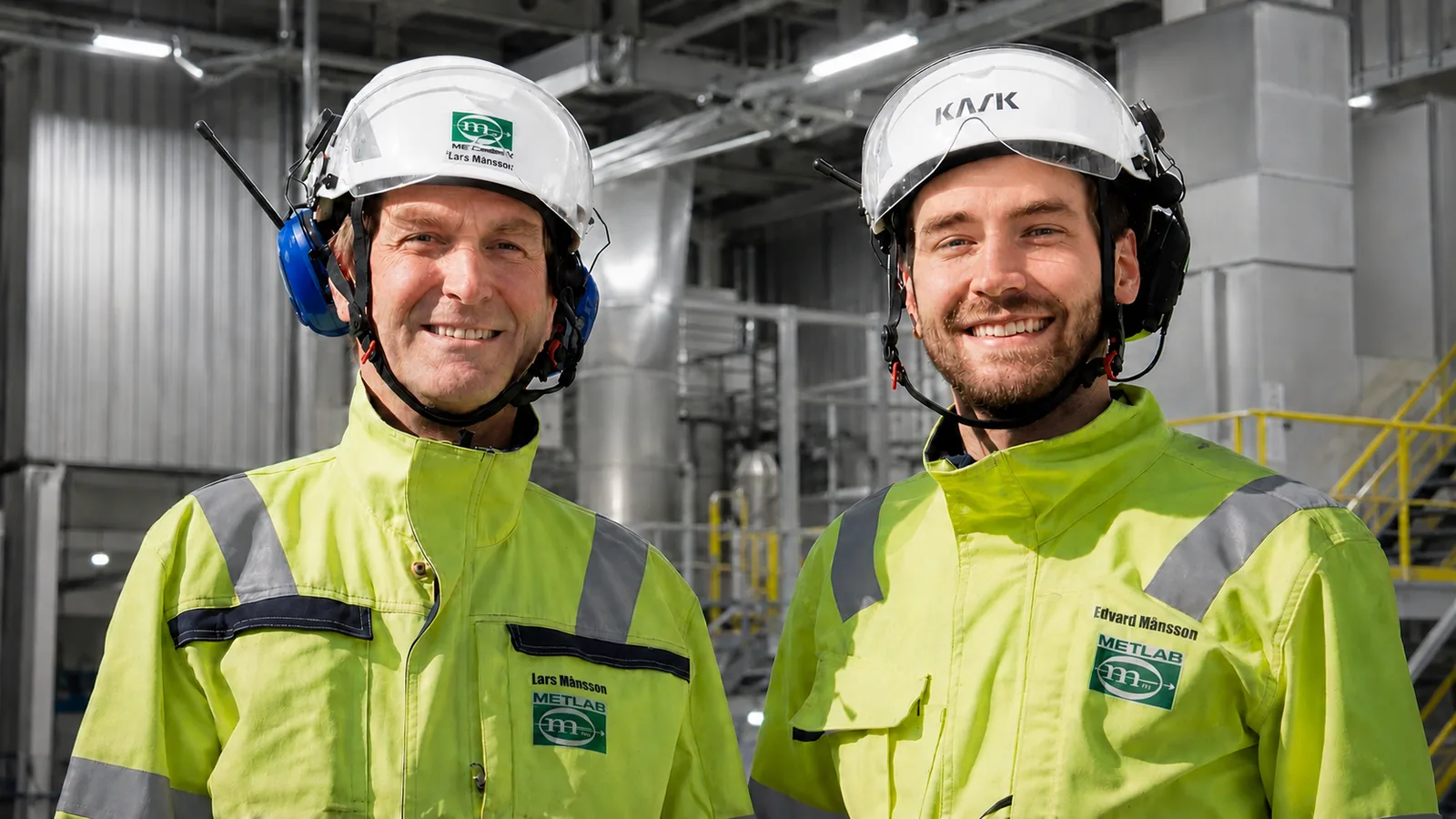
Sampler, on-site installation, ISO 13833 sampling, 14C analysis through an accredited laboratory, performance evaluation, and the final report — handled under one contract.
First permanent installation live since 2015, running continuously — among the longest ISO 13833 biogenic CO2 sampling track records in Europe.
Sweden's first air laboratory, founded 1965. Accredited to ISO/IEC 17025:2018 for emission measurements and calibrations. We design and build the C14G2 ourselves — the lab uses the instruments, and field use refines them.
Whether you operate the C14G2 yourself or hand the whole programme to METLAB, the 14C result is analysed by an accredited laboratory and the sampling behind it is done to ISO 13833.
The instrument
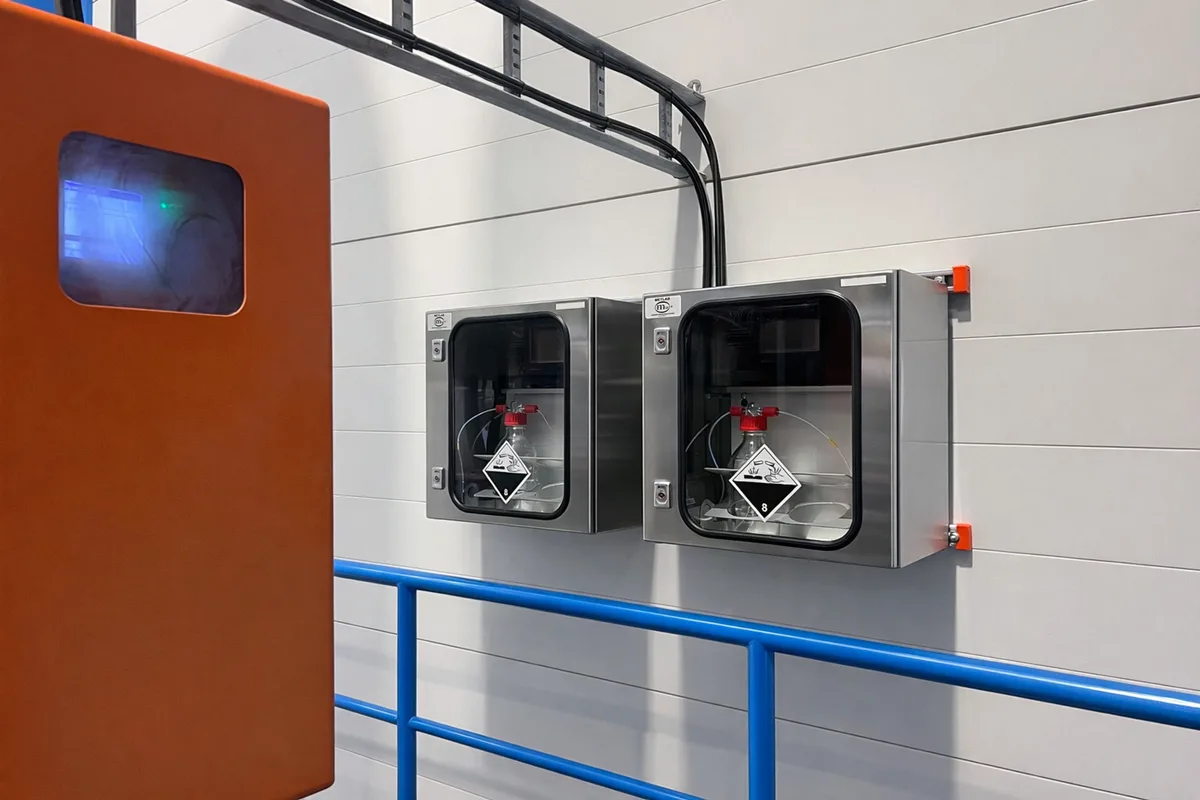
The METLAB C14G2 captures CO2 in liquid absorbent under flow-proportional control, per EN-ISO 13833:2013. It is built for permanent installation in WtE stacks and for emissions laboratories that run sampling campaigns at multiple sites.
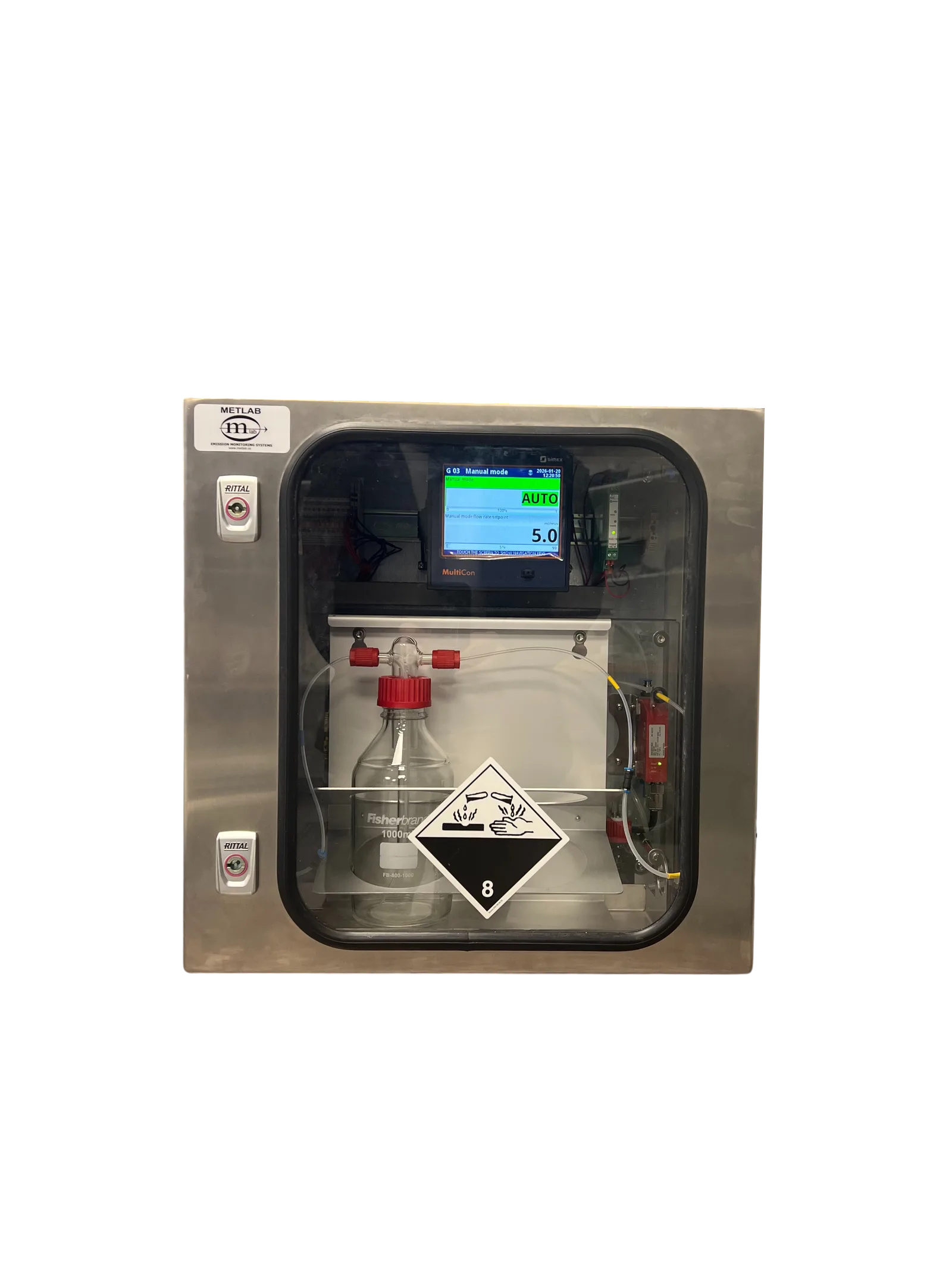
A third-generation design, refined over ten years of accredited measurements to ISO 13833:2013.
4M NaOH absorbent delivers uniform gas contact across the full sampling period. No channeling, no uneven saturation, and a sample exchange that can be performed safely with minimal training.
The C14G2 measures O2 downstream of the absorbent continuously. Comparing it to the stack CEMS O2 flags any air ingress in real time, so leaks are detected and expensive invalidated samples are avoided.
Sample flow is regulated against the plant's CEMS flow signal directly over 4–20 mA. Proportionality is maintained well within standard requirements, even under variable gas-flow conditions.
Operational parameters are accessible from the control room, including remote start and stop of sampling.
560 × 500 × 300 mm at 17 kg — small enough to wall-mount in a stack corridor without dedicated floor space.
How it works
Flue gas is drawn from the stack, conditioned to remove moisture, and proportioned to the C14G2 where CO2 is captured in 4M NaOH absorbent at approximately 5 mL/min, proportional to flue gas flow. The plant's CEMS provides the flow reference. There are two common ways to plumb this in — pick the one that fits your facility.
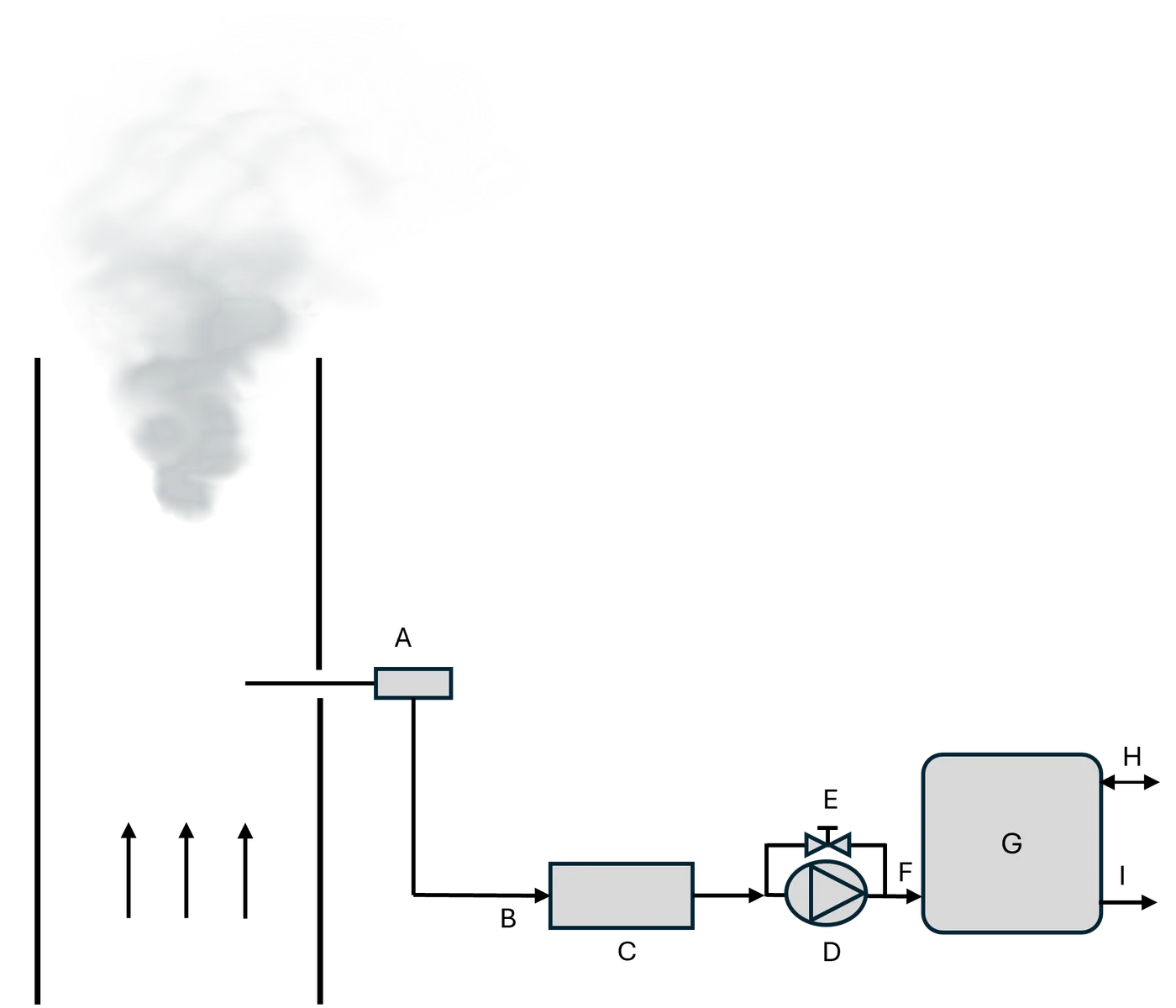
When to choose this. The default option for new installations and for plants that want the CO2 sampler to run independently of CEMS uptime. Full control over sample conditioning and continuity. On the downside, it requires a larger investment than the optional method.
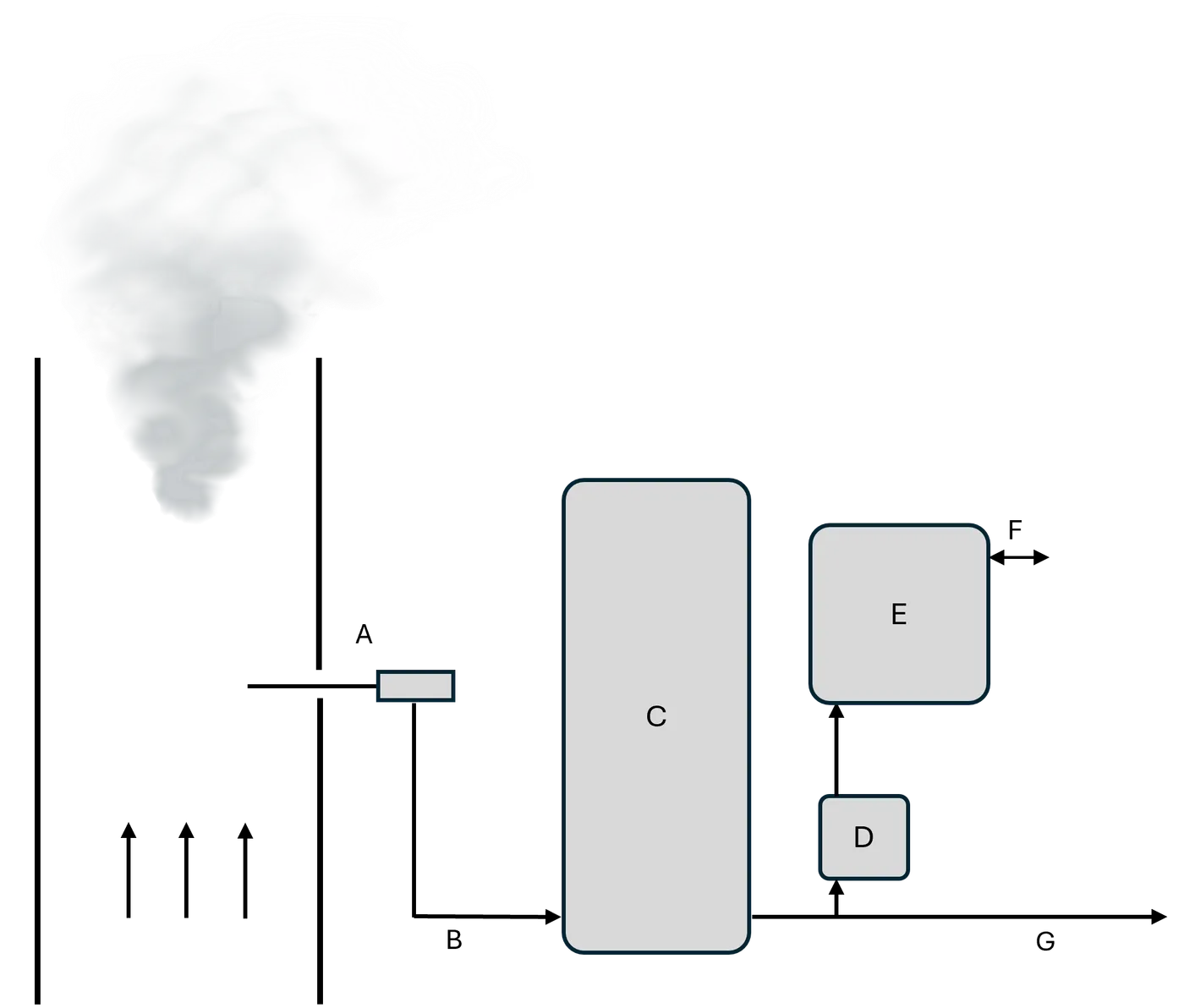
When to choose this. The lowest-cost configuration where the plant already runs a CEMS that delivers a dry, unaltered sample stream. Trade-off: sample continuity is tied to CEMS uptime, so any CEMS maintenance or fault pauses the biogenic-CO2 campaign as well.
Either way, the sampler captures the same way and reports the same way. METLAB engineers can advise on the right choice for your stack configuration during the quote stage.
In the field
The charts below are taken from a METLAB monthly report for a Waste-to-Energy plant, covering one month of the C14G2 running against the plant's CEMS. They illustrate the two things that determine whether a biogenic CO2 measurement is defensible at audit: proportionality under variable flow conditions, and leak integrity across the whole measurement period.
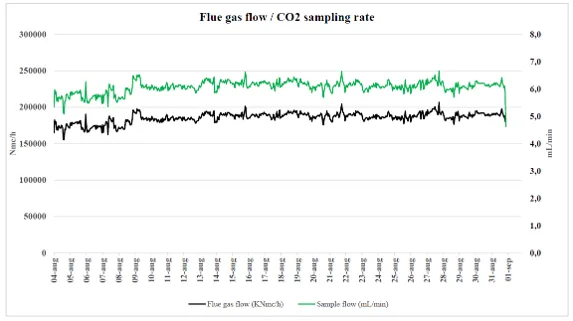
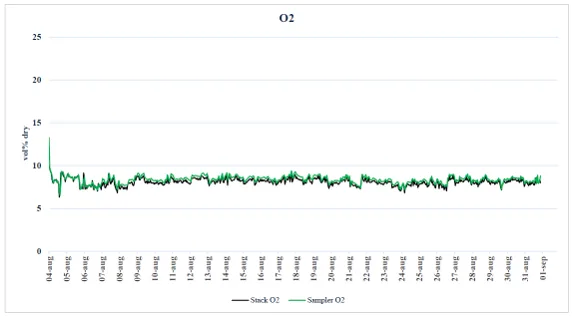
Both signals are available continuously. If something goes wrong, you find out immediately.
Specification
| Description | Specification |
|---|---|
| Dimensions (W × H × D) | 560 × 500 × 300 mm (excl. wall-mount) |
| Weight | 17 kg |
| Operating temperature | 0…+30 °C |
| Storage temperature | −20 °C…+50 °C |
| Transport temperature | −20 °C…+50 °C |
| Relative humidity | 20…90 % |
| Altitude | −300…2000 m |
| Power | 100–240 V, 50/60 Hz, 1 A, Category II |
| Gas connections | Swagelok 6 mm compression fittings |
| Input signals (4–20 mA) | Stack O2; flue gas flow |
| Output signals (4–20 mA) | Leak detection O2; sampling rate |
| Remote on/off | Relay |
Mounting. Available wall-mount (configurations A or B, C-C dimensions on request) or with rubber feet + carrying handle for portable use. Standard 2 m power cable with CEE 7/4 (“Schuko”, Type F) plug; open-end termination available on request.
Two ways to engage
For operators and integrators who run their own sampling campaigns.
For operators who want EU ETS compliance delivered turn-key.
Absorbent preparation
Absorbent installation
CO2 sampling (continuous, typically 1 month)
Sample collection
Sample handling and 14C analysis
Reporting (biogenic / fossil fraction + sampling evaluation)
Absorbent handled safely, end to end
The C14G2 captures CO2 in a 4M NaOH solution, and the quality of that solution sets the quality of the result. METLAB's laboratory prepares it carbonate-free, so the only carbon the absorbent carries to the lab is the carbon sampled from the stack.
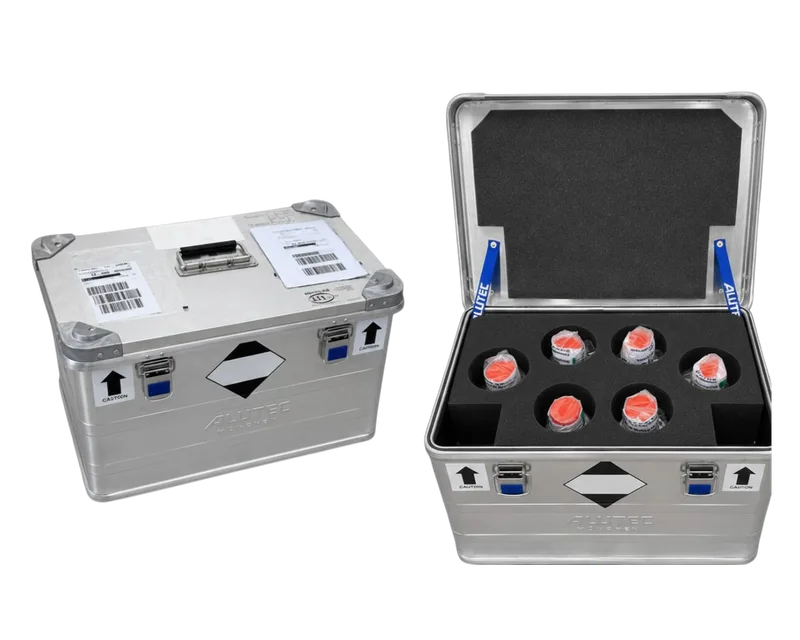
The prepared absorbent ships in custom heavy-duty transport cases — foam-seated, sealed, and rated for long-distance transport. The same cases carry the exposed absorbent back for 14C analysis. Preparation, transport, and return stay within one controlled chain, with no carbonate contamination introduced between the lab and the stack.
Current active markets include Sweden, Denmark, Norway, Germany, and Italy — with active expansion across the EU.
Customer references available on request — ask via the form below.
Frequently asked
Yes. It implements EN-ISO 13833:2013 — the radiocarbon (14C) method recognized for separating biogenic from fossil CO2 in flue gas, which is the method referenced by the EU MRR framework for WtE.
One month of continuous sampling is the standard duration. Shorter or longer campaigns are possible depending on what your regulator requires.
Yes. 4–20 mA inputs accept stack O2 and flue gas flow signals from the CEMS, and the sampler can optionally be installed downstream of the CEMS outlet if the stream is dry and unaltered.
The C14G2 monitors its own O2 against the CEMS O2 continuously. Any divergence is visible on the touchscreen and on a 4–20 mA output, so leaks are detected in hours — not weeks.
An accredited radiocarbon laboratory partner. METLAB handles sample preparation, splitting, dispatch, evaluation and the final report.
On request via the contact form — depends on configuration and current queue.
Yes, on request. Submit the form and tick “Request customer references” and we'll connect you with a relevant reference plant.
Contact
Tell us about your plant and what you need — equipment, full-service sampling, analysis, or all three. A METLAB engineer will be in touch within two working days.
We've received your enquiry and a METLAB engineer will respond within two working days.